In an attempt to change the way information is presented, we’ll be speaking to researchers, experts, and all round wrinkly brained individuals, making them simplify what they have to say and in turn, hopefully, improving our understanding of a broad range of topics rooted in psychology. Join us as we try to develop ourselves, one brain fold at a time.
Instagram: @thesmoothbrainsociety
TikTok: @thesmoothbrainsociety
Youtube: @thesmoothbrainsociety
Facebook: @thesmoothbrainsociety
Threads: @thesmoothbrainsociety
X/twitter: @smoothbrainsoc
https://linktr.ee/thesmoothbrainsociety
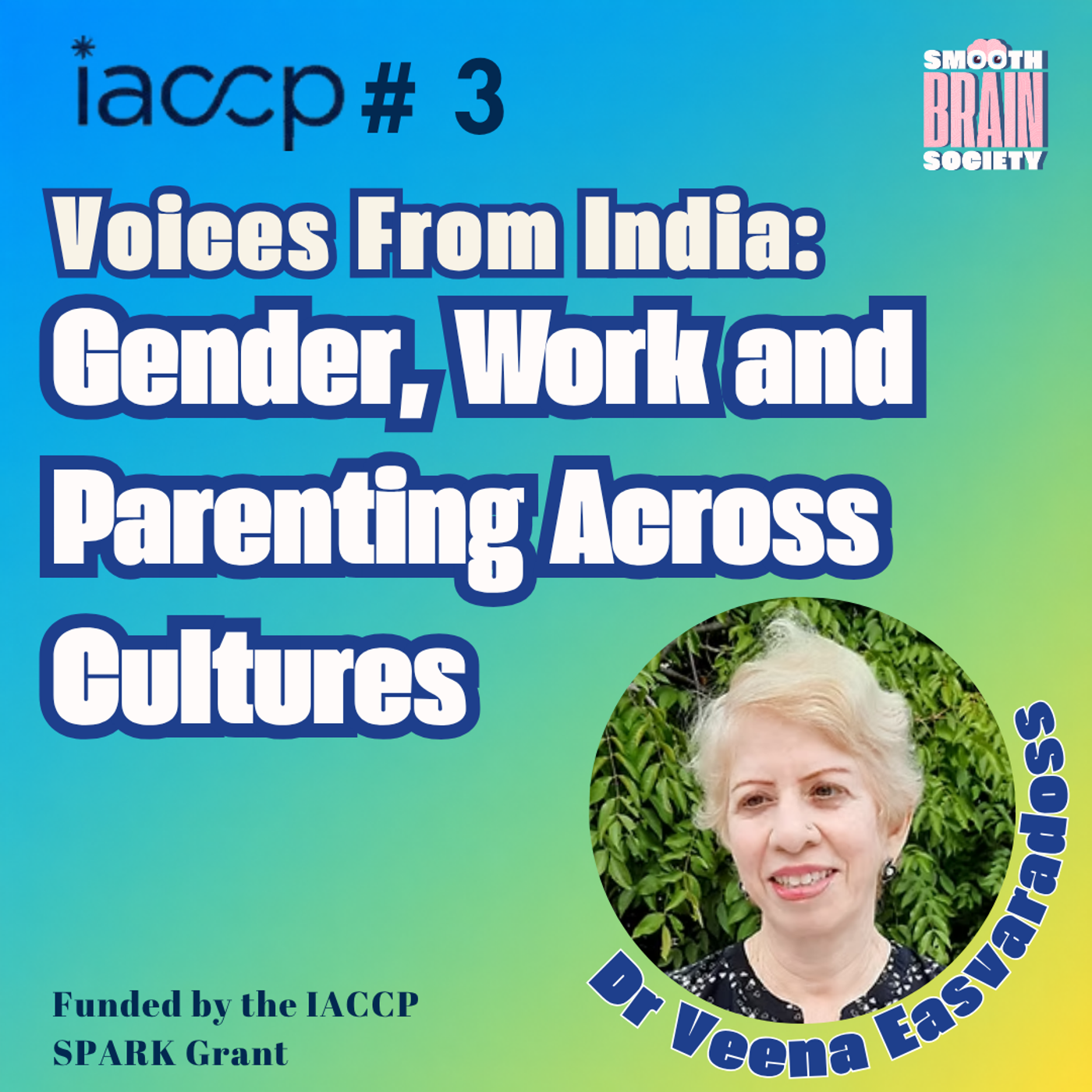
In this episode of Voices from the Field, we speak with Dr Veena Easvaradoss, a clinical psychologist and researcher from Chennai, India, about the ways culture and gender shape everyday life.
We discuss her research with women who roll bidis (a tobacco product) in their homes, exploring gendered work, economic opportunity, health risks and an intervention designed to help workers move towards alternative livelihoods. We then turn to parenting in India, looking at how cultural values, urbanisation and changing family structures shape parenting practices and why psychological theories developed in one cultural context may not always translate neatly to another.
Part of Voices from the Field: International Conversations on Cross-Cultural Research Practice, supported by the International Association for Cross-Cultural Psychology (IACCP) SPARK Grant.
Topics: Gender and work • Bidi workers • Women’s livelihoods • Occupational health • Alternative livelihoods • Indian parenting • Family and culture • Cross-cultural psychology • Cultural adaptation • Gender roles • Socioeconomic inequality
Chapters:
00:00 Introduction to the episode and guest
00:44 Dr. Easvaradoss Shares Her Origin Story
03:13 Women in the workplace: The Indian Context
09:54 The Bidi industry and its gendered nature
16:57 Interventions to help bidi rollers
33:13 Policy, welfare and Future
35:25 Parenting Styles in India
48:03 Dream Research and Wrap up
#CrossCulturalPsychology #CulturalPsychology #India #GenderAndPsychology